
Why do people collect cameras?
Selling cameras, lenses or a collection?
Collecting cameras and lenses: a passion for craftsmanship, history and discovery.
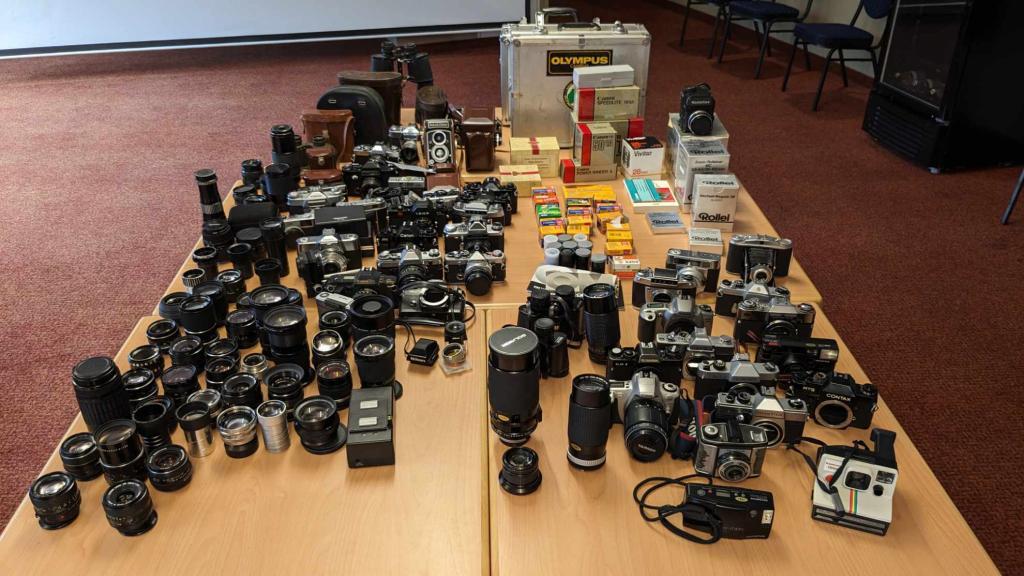
For some people, a camera is simply a tool for recording a moment. For others, it brings technology, art and history together. Collectors of Nikon, Canon, Leica, Hasselblad and many other systems preserve not only equipment but examples of how photographic ideas became physical objects.
Collecting often means more than accumulating possessions. It may reflect a wish to complete a series, an appreciation of craftsmanship or a record of changing interests. Every camera and lens can tell a story through its design, the photographs made with it or the memories it holds for its owner.
The emotional side of collecting
The bond between collectors and their equipment often involves pride and care. A sturdy Pentax SLR or a Fujifilm rangefinder can be valued as a piece of design worth preserving, as well as something that still makes photographs.
Buying cameras and photographic equipment
Collectors usually choose additions carefully. When they sell part of a collection, the money may be only one consideration. Many also want to find an owner who values the craft and history of photography as much as they do.
Collecting can encourage creativity, historical curiosity and technical knowledge. In a fast-moving digital world, it offers time to examine how things were made. Collectors often develop specialist knowledge and share it through conversations, auctions, events and online communities.
Physical objects can still play a rich part in lives increasingly organised around digital media. Cameras and lenses make culture, history and personal interests tangible, right down to the feel of a focusing ring or the sound of a shutter.
Seen through a psychoanalytic lens,
collecting might express a wish for continuity, an attachment to the past or resistance to things passing away. These are possible interpretations, rather than explanations that apply to every collector.
A collection can become an extension of identity. Nikon, Canon or Leica may stand for personal ideals as well as quality and prestige. Wanting equipment to go to a good home can reflect a hope that something meaningful will continue beyond our ownership.
Buying and selling
The act of turning a collection into money through buying and selling can involve questions of control as well as value. It may also be a carefully considered way of living with material objects: choosing, arranging and eventually passing them on.
A collection communicates without words. Its selection and arrangement may suggest past adventures, unrealised ambitions or particular tastes. Individual cameras and lenses can connect their owner with different parts of their own story.
Collecting can also be read as a quiet response to a throwaway culture. Durable cameras offer a physical counterpoint to the fleeting digital image. For some owners, caring for them is a way of keeping useful things present.
From this perspective, collecting creates a small area of order within a complicated life. Looking through lenses, literally and figuratively, can provide a place for reflection and self-expression: sometimes a retreat, sometimes a way of engaging more closely with the world.
The wish to build a broad collection
may lead photographers towards less familiar manufacturers. AGFA, Voigtländer and Yashica have their own histories of innovation and craftsmanship. Exploring them can be a way of forming a taste beyond the most prominent brands.
A Rollei, Zeiss Ikon or Mamiya can become one piece of a personal life story. A Contax or Minolta may recall a particular journey; an old Kodak or Polaroid may connect someone with family life. The associations are as individual as the collections themselves.
The search for a fine Leica M or an unusual Konica can also be understood as a way of directing energy into a demanding cultural interest. The attention paid to a well-preserved Linhof or Alpa is part of the pleasure, not merely a calculation of its price.
Selling film photography equipment
Selling a valued camera need not mean erasing its history. Passing on a Kine Exakta, Olympus OM or Argus can allow it to remain in use while making room for other interests and experiences. Attachment and letting go can both belong to the life of a collection.
The meanings of collecting are as varied as the cameras. A Plaubel Makina or an Ihagee may carry just as much personal significance as a more famous model. Questions of time, control, memory and purpose can all find a place in the way we choose and care for photographic equipment.
Recent articles:
- Old cameras and AI search
- Forgotten lenses: a fictional story of old cameras and Elon Musk
- The smile behind the lens: a story of connection and memory
- Beyond optics and illusion: Nietzsche and photography
- The retro revival: a Hegelian view of selling old cameras
Updated 29 September 2026: For current information about selling cameras, lenses, collections and inherited equipment, visit the Analog Lounge GmbH homepage.
Enquire about selling your equipment
A few overview photos or a list are usually enough for an initial assessment.